Composite vs. Wood Decking in Austin Heat: What Actually Holds Up
Neither material is universally better. Here's what actually changes depending on which one is under your bare feet in August.
September 7, 2026 · 3 min read
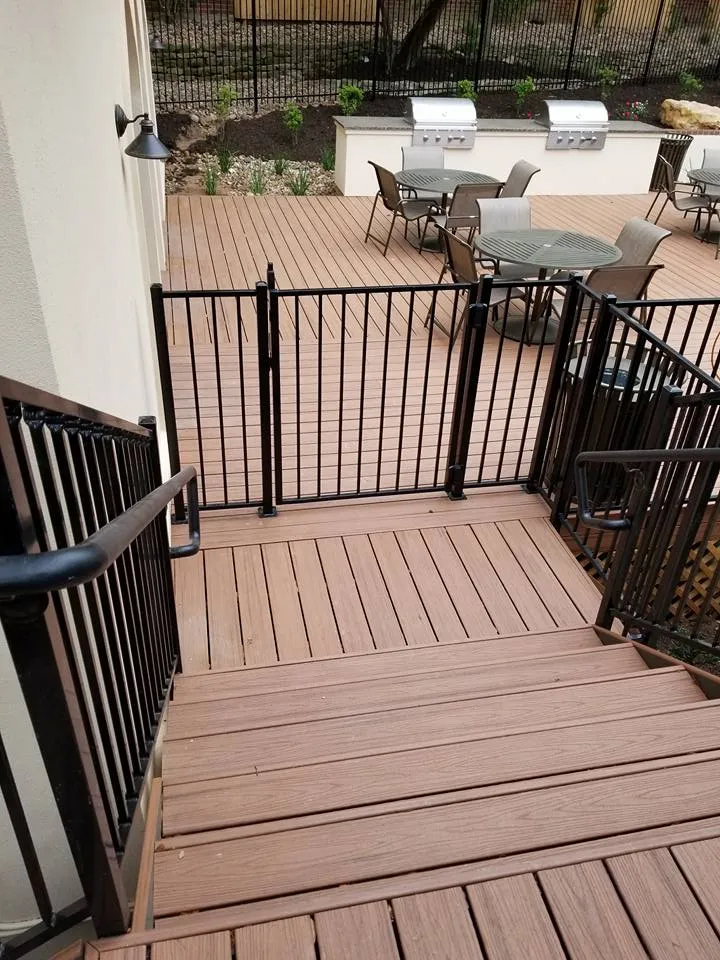
Austin summers put decking materials through a real stress test: months of high UV, days that don't cool off much overnight, and humidity that swings from bone dry to sticky depending on the week. The composite-versus-wood question comes up on almost every deck consultation, and the honest answer is that both hold up fine here, as long as the material is matched to how you actually plan to maintain it.
How composite handles the heat
Composite decking (Trex, TimberTech, and Azek are the brands installed most often here) is engineered to resist fading, cracking, and splintering under sustained sun exposure, which is the main reason it's popular in a climate like this one. It doesn't need staining or sealing, and the color runs through the board rather than sitting only on the surface. Composite decking carries a 25-year manufacturer warranty, and TimberTech and Azek products carry 30 years, which is a reasonable proxy for how confident the manufacturers are in long-term heat performance.
How natural wood handles the heat
Natural wood brings a different set of tradeoffs. Species like Western Red Cedar, Ipe, Tiger Wood, and Mosorunduba each have their own natural resistance to moisture and insects, and dense hardwoods like Ipe in particular hold up well structurally over decades. What changes with heat and sun is the surface: wood will gray and weather without regular staining, and Central Texas sun speeds that timeline up compared to a milder climate. Natural wood decking is backed by a 30-year warranty, the same tier as TimberTech and Azek, which reflects how durable a well-installed hardwood deck actually is when it's properly maintained.
Surface temperature is a real consideration, not just a marketing line
Anyone who has walked barefoot across a dark deck at three in the afternoon in July already knows this instinctively: darker surfaces get hotter underfoot than lighter ones, and that's true of both composite and wood. It's one more reason the color and finish conversation during a design consultation matters as much as the material conversation. A shaded area under a pergola or a patio cover changes this equation more than the material choice alone does.
Maintenance rhythm is the real difference
- Composite: no staining or sealing required; occasional washing to keep the surface clean; consistent appearance for the life of the warranty.
- Natural wood: periodic staining or sealing to maintain color and protect against weathering, on a schedule that depends on species and sun exposure.
- Both materials: a 5-year structural warranty applies to the build itself, regardless of which decking material sits on top.
- Under-deck drainage, like Trex RainEscape, is available for either material if the space underneath the deck will get used.
What's underneath the decking matters as much as the decking itself
Neither material performs well long-term if the framing underneath it is fighting the ground it sits on. Central Texas soil, especially the clay-heavy soil common around Austin, expands and contracts more than a lot of homeowners expect as it moves between wet and dry, and footings and framing need to account for that movement rather than get surprised by it. This is less about the composite-versus-wood question and more about why the crew building the frame matters at least as much as the brand of board on top of it. A 5-year structural warranty on the build itself, separate from the materials warranty, is one way to judge how confident a builder is in their own framing work.
So which one should you pick
There isn't a universally correct answer, only a correct answer for your yard, your budget, and how much time you want to spend on maintenance. If low upkeep matters more than anything else, composite is usually the answer. If you want the specific look and feel of real wood underfoot and don't mind staining it every so often, a hardwood like Ipe holds up to Austin summers better than most people expect. Austin's Decks Unlimited is a TrexPro certified builder and a certified installer for Trex, TimberTech, and Azek, and also installs the natural wood species listed above, so the material conversation during a free design consultation can be about what's right for you, rather than what one contractor happens to specialize in. Call (512) 467-4923.
Austin's Decks Unlimited, (512) 467-4923
Call (512) 467-4923More articles
15 Questions to Ask Before You Hire a Deck Company in Austin
Use this before you compare quotes, so you're judging deck contractors on the details that actually matter and not just the bottom line number.
Three Ways a Deck Contractor Turns an Idea Into a Finished Deck
A look at what happens between a photo saved on your phone and a finished deck, and where a contractor's experience actually shows up.